
How to Choose a Hard Candy Packaging Machine for Irregular Shapes
Choosing a hard candy packaging machine is not just about buying a bagger. Hard candy may look easy to pack, but once you deal with irregular shapes, powder-coated surfaces, mixed flavors, or lollipops with sticks, the machine setup matters a lot.
The right machine should match your candy type, target weight or count, final package style, required speed, and future automation plan. Otherwise, you may face jamming, broken candy, inaccurate packs, wrapper damage, and unnecessary downtime.
This guide explains how to choose a hard candy packaging machine for irregular candy, lollipops, pillow bags, premade pouches, jars, cartons, display cartons, and secondary packaging lines.
Common Types of Hard Candy and Irregular Candy in the US Market
The US hard candy market includes far more than standard bulk candy. Different candy types have different shapes, weights, surfaces, and packaging requirements.
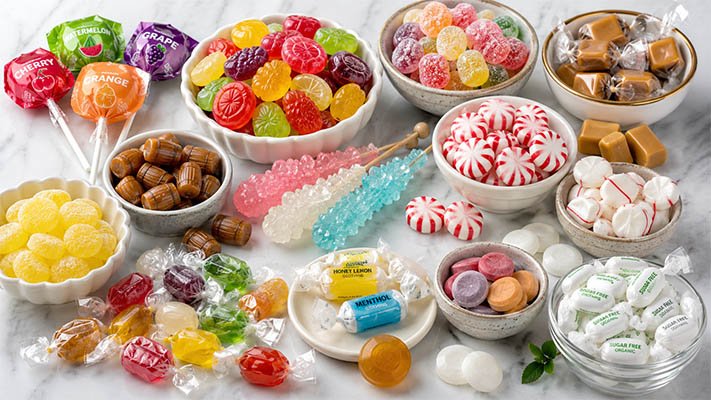
Common products include:
- Fruit-flavored hard candy
- Sour hard candy
- Butterscotch candy
- Peppermint candy and starlight mints
- Rock candy and crystal candy
- Lemon drops
- Root beer barrels
- Mixed hard candy
- Lozenges and throat drops
- Organic or sugar-free hard candy
- Lollipops and suckers
Some products are smooth and easy to flow. Others have sharp edges, uneven sizes, sugar dust, sour powder, or fragile structures. These differences affect feeding, weighing, counting, filling, sealing, and cleaning.
Lollipops are a special category. After individual wrapping, they are often counted or weighed into retail bags, cartons, or display cartons. For lollipop secondary packaging, machine selection should consider feeding stability, stick orientation, counting accuracy, carton format, and gentle handling to avoid wrapper damage.
Why Irregular Hard Candy Needs the Right Packaging Machine
Irregular hard candy creates several packaging challenges.
First, uneven shapes and sizes affect product flow. Candy may bridge, jam, or discharge unevenly if the feeding system is not designed correctly.
Second, different piece weights can reduce weighing or counting stability. For retail packs, this may lead to product giveaway or underweight packs.
Third, hard edges may increase machine wear over time, especially at contact points, chutes, and discharge areas.
Fourth, brittle candy can break if the drop height is too high or the feeding speed is too aggressive.
Fifth, sour powder, sugar dust, or surface coating may contaminate the sealing area and affect package quality.
For wrapped lollipops, the main concerns are stick tangling, wrapper scratches, feeding stability, and counting accuracy. That is why actual product testing is important before finalizing the machine design.
Common Packaging Formats for Hard Candy and Lollipops
Before choosing the machine, confirm the final package format.
Common formats include:
- Pillow bags for bulk hard candy
- Premade pouches
- Stand-up pouches with zipper
- Jars or bottles
- Bulk bags
- Counted retail bags
- Folding cartons
- Display cartons
- Club-store multipacks
Different package formats need different equipment. Pillow bags usually use a vertical form fill seal machine. Stand-up pouches and zipper pouches usually use a premade pouch packing machine. Jars and bottles need filling systems. Cartons and display cartons need counting, grouping, and loading systems.
In short, decide the final package first, then choose the right packaging machine around it.
VFFS Machines for Hard Candy Pillow Bags
A vertical form fill seal machine is a common choice for hard candy pillow bags.
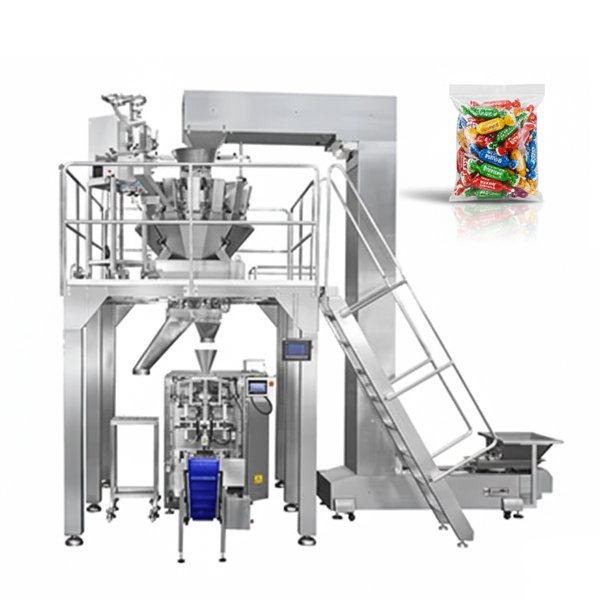
It is suitable for:
- Bulk hard candy
- Mixed hard candy
- Lemon drops
- Root beer barrels
- Starlight mints
- Medium to high-speed pillow bag packaging
A typical system includes an elevator, multihead weigher, VFFS machine, finished bag conveyor, and optional checkweigher or metal detector.
The main advantage is efficiency. Roll film cost is usually lower than premade pouches, making VFFS a practical option for large-volume candy bagging.
A candy bagging machine with multihead weigher is suitable for packing by weight. The multihead weigher helps improve accuracy, reduce product giveaway, and handle different target weights.
When choosing a vertical form fill seal machine for hard candy, check bag size range, film type, target weight, sealing quality, product drop height, and cleaning access. For powder-coated candy, sealing protection and easy cleaning are especially important.
Premade Pouch Machines for Hard Candy and Retail Candy Packs
A premade pouch machine is better when package appearance matters more.
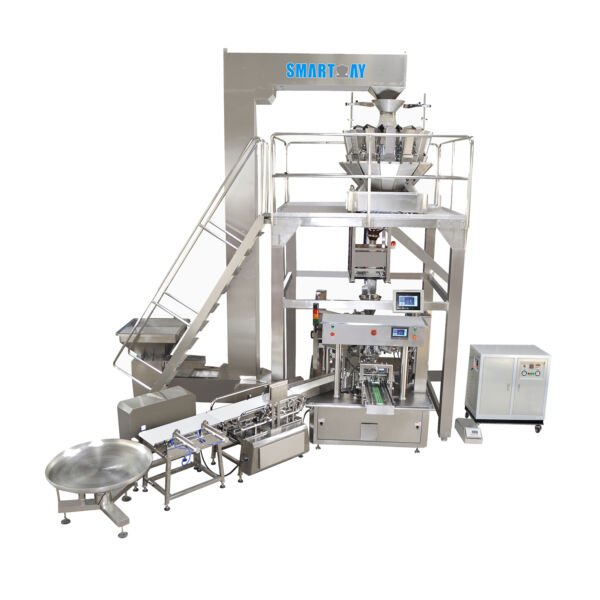
It is suitable for:
- Stand-up pouches
- Zipper pouches
- Premium retail candy packaging
- Organic hard candy
- Sugar-free hard candy
- Resealable family-size candy bags
Premade pouches usually look better on retail shelves and support more premium branding. They are common for specialty candy, private-label products, and family-size packs.
A premade pouch packing machine for hard candy can work with a multihead weigher, linear weigher, or counting system. The right choice depends on whether the product is packed by weight or by count.
The system can also integrate:
- Date coding
- Hole punching
- Air exhaust
- Zipper opening
- Pouch detection
- Checkweighing
- Metal detection
For retail candy packs, focus on stable filling, reliable sealing, clean operation, and fast changeover between pouch sizes or SKUs.
Weighing and Counting Systems for Irregular Candy
For irregular candy, the weighing or counting system is the core of the packaging line.
Packing by Weight
A multihead weigher is commonly used for loose hard candy packed by net weight.
It is suitable for:
- Bulk hard candy
- Mixed candy
- Lemon drops
- Mints
- Root beer barrels
- Sour candy
- Retail bags
- Family-size bags
The weigher combines portions from different weighing heads to reach the target weight. This improves accuracy and reduces product giveaway.
For irregular candy, the weigher should use suitable bucket size, contact surface, vibration control, and discharge design. Fragile candy needs gentle handling. Powder-coated candy needs easier cleaning.
Packing by Count
A counting system is used when each pack needs a fixed number of pieces.
It is suitable for:
- Individually wrapped candy
- Lollipops
- Lozenges
- Throat drops
- Sample packs
- Promotional packs
- Carton loading
- Display carton packing
Counting accuracy depends on stable feeding and product separation. If products overlap or feed unevenly, the count may be wrong.
For some candy manufacturers, both systems may be used. Loose hard candy is packed by weight, while wrapped candy and lollipops are packed by count.
Counting and Secondary Packaging for Lollipops
Lollipops usually enter secondary packaging after individual wrapping. At this stage, the machine counts, groups, and packs wrapped lollipops into bags.
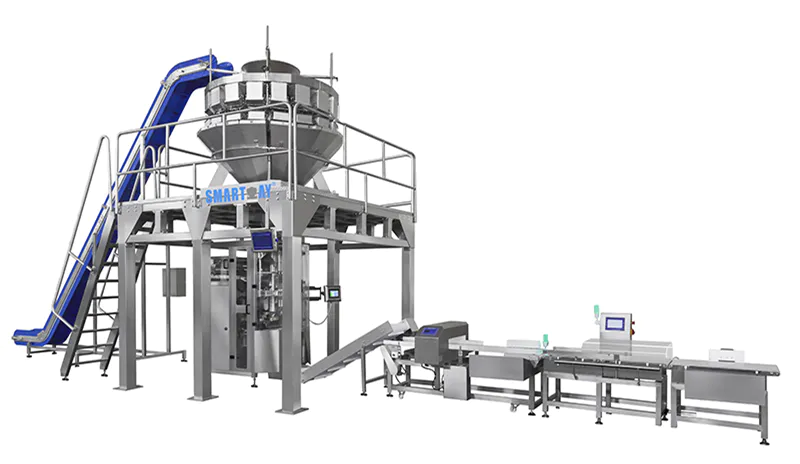
Common lollipop secondary packaging formats include:
- Counted retail bags
- Pillow bags
The main challenge is stable feeding. Lollipop sticks can overlap or tangle. Wrappers can be scratched or damaged if the feeding system is too rough.
For bagging, stick orientation may be less strict. For cartoning or display carton packing, orientation may matter more. Mixed lollipop packs may also require counting by flavor, color, or SKU ratio.
A complete lollipop packaging system can connect with a bagging machine, cartoner, case packer, or display carton packing line. The goal is to reduce manual labor, improve count accuracy, and protect finished wrapped products.
How to Prevent Breakage, Jamming, and Wrapper Damage
Good machine design helps reduce downtime and product loss.
Important details include:
- Gentle elevator and feeding design
- Controlled product drop height
- Anti-jamming discharge design
- Food-grade contact parts
- Rounded product contact surfaces
- Adjustable vibration and feeding speed
- Suitable bucket size
- Easy cleaning access
- Sample testing before production
For loose hard candy, the goal is to reduce breakage, jamming, and unstable discharge. For powder-coated candy, the machine should be easy to clean and protect the sealing area.
For wrapped lollipops, the goal is to reduce stick tangling, wrapper damage, and counting errors.
Sample testing is the best way to confirm whether the machine can handle your actual product.
Key Factors to Consider Before Buying a Hard Candy Packaging Machine
Before buying, prepare these details:
- Candy type
- Wrapped or unwrapped product
- Candy size and shape
- Target weight or target count
- Bag, pouch, carton, or display carton style
- Required speed
- Weighing or counting accuracy
- Product fragility
- Surface coating or powder
- Factory space
- Cleaning and maintenance requirements
- Date coding and labeling needs
- Checkweigher or metal detector integration
- After-sales service and spare parts support
These details help the supplier recommend the correct machine instead of a standard model that may not fit your production.
Hard Candy Packaging Machine Options by Production Scale
Different production scales need different levels of automation.
Small Batch Production
Small candy producers may use semi-automatic weighing or counting, manual feeding, simple bag sealing, or manual carton loading. This setup has lower upfront cost but depends more on labor.
Growing Candy Manufacturers
Growing factories usually need more automation, such as:
- Elevator + multihead weigher + VFFS machine
- Premade pouch machine + weigher
- Counting system + bagger
- Checkweigher integration
- Date coding system
This setup improves speed, accuracy, and consistency while reducing manual labor.
Industrial Production Lines
Large candy manufacturers may need a complete automatic line, including:
- Automatic feeding
- Multihead weighing or counting
- Bagging
- Cartoning or display carton packing
- Checkweigher
- Metal detector
- Labeling
- Case packing
- End-of-line automation
For industrial production, the key is integration. Machines should work together smoothly from feeding to final packing.
Questions to Ask Your Machine Supplier
Before placing an order, ask these questions:
- Can the machine handle our actual candy or lollipop samples?
- Should we pack by weight or by count?
- What accuracy can the weighing or counting system achieve?
- Can the machine handle irregular shapes or mixed candy?
- How does the system reduce candy breakage and jamming?
- For lollipops, how does the system reduce stick tangling and wrapper damage?
- What bag, pouch, carton, or display carton formats are supported?
- Can the system integrate with date coding, checkweigher, metal detector, or cartoner?
- How long does SKU changeover take?
- What installation, training, spare parts, and after-sales support are available?
A good supplier should recommend a solution based on your real product, package format, speed target, and factory layout.
Conclusion: Match the Machine to Your Candy Shape, Count, Weight, and Final Package
There is no one-size-fits-all hard candy packaging machine.
Smooth mints, sour candy, rock candy, mixed hard candy, wrapped candy, and lollipops all behave differently. The right machine depends on candy shape, product condition, target weight or count, final package format, required speed, and service support.
For irregular hard candy, sample testing is important. For lollipops, pay close attention to counting accuracy, stick control, feeding stability, wrapper protection, and secondary packaging format.
Send us your candy sample, target weight or count, package format, and required speed. Smartpack can recommend a suitable hard candy packaging solution for pillow bags, premade pouches, cartons, display cartons, and secondary lollipop packaging.