 Skip to content

Flour Packing Machines
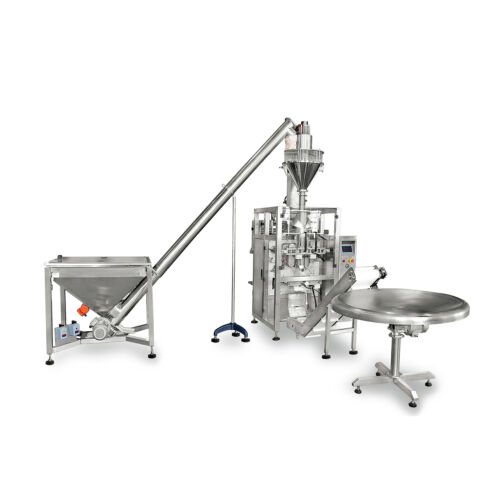
Flour may look uniform, but its behavior changes during conveying and filling. Aerated flour occupies more volume, settled flour becomes denser, and fine particles can escape from the package opening. An auger filler configured without testing the actual flour may produce weight variation, dusty equipment and unreliable seals. Smart Weigh combines auger filling equipment with VFFS or premade pouch packing machines. The auger size, dosing speed, hopper agitation, filling spout and bagger timing are configured around the flour type, target weight and package. Sample testing helps confirm dosing accuracy, dust control and the finished bag shape.
Recommended Flour Packing Machines

Common Flour Packaging Challenges
Flour packaging depends on more than selecting an auger filler. Bulk density, trapped air and fine airborne particles all influence the filling weight, bag appearance and seal quality.
Bulk-Density Changes
Flour becomes less dense after conveying and denser as it settles. Auger calibration, consistent hopper feeding and optional weight feedback help stabilize each dose.
Trapped Air
Fast filling can trap air inside the flour and create swollen, unstable bags. Controlled filling speed and optional bag-settling or deaeration devices improve the finished package shape.
Airborne Dust
Fine flour can escape around the filling spout and coat nearby equipment. Enclosed transfer, a closely matched filling spout and optional dust extraction help contain the powder.
Flour in the Seal
Loose particles may continue falling after the auger stops and become trapped in the sealing jaws. Clean product cutoff and synchronized filling and sealing reduce weak or leaking seals.
