 Skip to content
Why Clamshell Packaging Still Makes Sense for Fresh Blueberries in the Americas
If you work in blueberries long enough, you see the same question come up over and over again:
With all the new packaging ideas on the market, why are fresh blueberries still mostly packed in clamshells?
It is a fair question. Buyers are hearing more about pouches, paper-based formats, sealed trays, and sustainability-driven packaging changes. But when you look at how fresh blueberries actually move through farms, packhouses, cooling, distribution, retail shelves, and consumer kitchens, clamshell packaging still checks a lot of the right boxes.
That is especially true across the Americas, where blueberry supply comes from very different production windows and market models. Peru ships into major export programs with a long season, Mexico pushes hard into key spring windows, Chile supplies important Southern Hemisphere volume, and the U.S. market still depends heavily on strong retail presentation during its domestic summer peak. In those conditions, growers and packers need packaging that protects fruit, travels well, looks right at retail, and works smoothly on automated lines. That is a big reason clamshells are still the go-to choice for fresh blueberries.
What clamshell packaging means in real blueberry operations
For fresh blueberries, a clamshell is not just a container. It is the standard retail pack format that many growers, shippers, retailers, and consumers already understand.
In practical terms, it is a rigid hinged container, most often clear, that protects the berries while showing the fruit to the customer. It is commonly used in pack sizes like 125g, 250g, 500g, and 1kg, which are also the formats highlighted on Smart Weigh’s blueberry clamshell packing line page. Those standard sizes matter because they make it easier for growers and packhouses to run repeatable retail programs instead of reinventing the packing process every time.
For growers in the Americas, that familiarity is valuable. Whether fruit is staying in domestic channels or moving through export supply chains, clamshells are already built into the way fresh blueberries are packed, stacked, displayed, and sold.
Fresh blueberries still need real protection
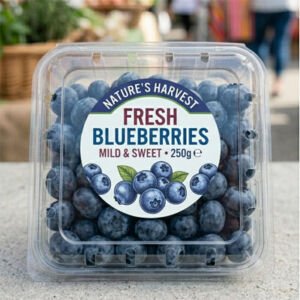
This is the biggest reason clamshells are still hard to replace.
Fresh blueberries may be small, but they are still a delicate fresh product. They can lose value fast if the package does not hold shape well, if fruit gets compressed in transit, or if the finished pack looks crowded or rough by the time it reaches retail.
That is where clamshells still do a better job than many flexible alternatives.
A rigid container helps reduce pack compression during handling, transport, pallet stacking, and shelf display. That matters at every stage, but it matters even more in long supply chains, which are common across the Americas. Peru and Chile both rely heavily on export channels, and Mexican berry producers also work within time-sensitive supply windows where presentation and condition still matter once the fruit reaches buyers. Packaging that protects fruit physically is not just a convenience in those markets. It is part of preserving saleable value.
Blueberries still sell on appearance
Fresh blueberries are not only bought by weight. They are bought by how they look.
Consumers notice berry size, bloom, color, cleanliness, and whether the fruit looks uniform in the pack. Retailers notice shelf presentation. Buyers notice whether a finished pack looks strong enough to represent the category well.
A clear clamshell helps on all of those points. It gives consumers visibility without opening the package. It gives retailers a format that is easy to display and restock. It gives growers and packhouses a more reliable way to present fruit consistently across many packs.
That is one reason clamshells keep showing up in blueberry programs, even when alternative formats are discussed. They work well in the real world of retail.
Clamshells fit the way blueberries are sold in the Americas
One thing that makes the Americas especially relevant here is the mix of domestic and export retail programs.
In the United States, the blueberry category is strongly retail driven, with July still recognized as National Blueberry Month and domestic supply peaks tied closely to summer merchandising. In Peru, long export movement makes standardized retail-ready packs especially important. In Mexico, strong spring windows increase pressure on packhouses to move fruit efficiently while still meeting buyer expectations. In Chile, export programs also place a premium on consistency and presentation.
Across all of those markets, clamshells make sense because they are already aligned with how fresh blueberries are commonly sold:
- they support standard retail weights
- they are easy to stack and display
- they are familiar to buyers and consumers
- they work well in export and domestic channels
- they fit established blueberry handling practices
That is not a small advantage. Standardization saves time, reduces confusion, and makes it easier to run volume during peak season.
Clamshells also work better with automatic packing lines
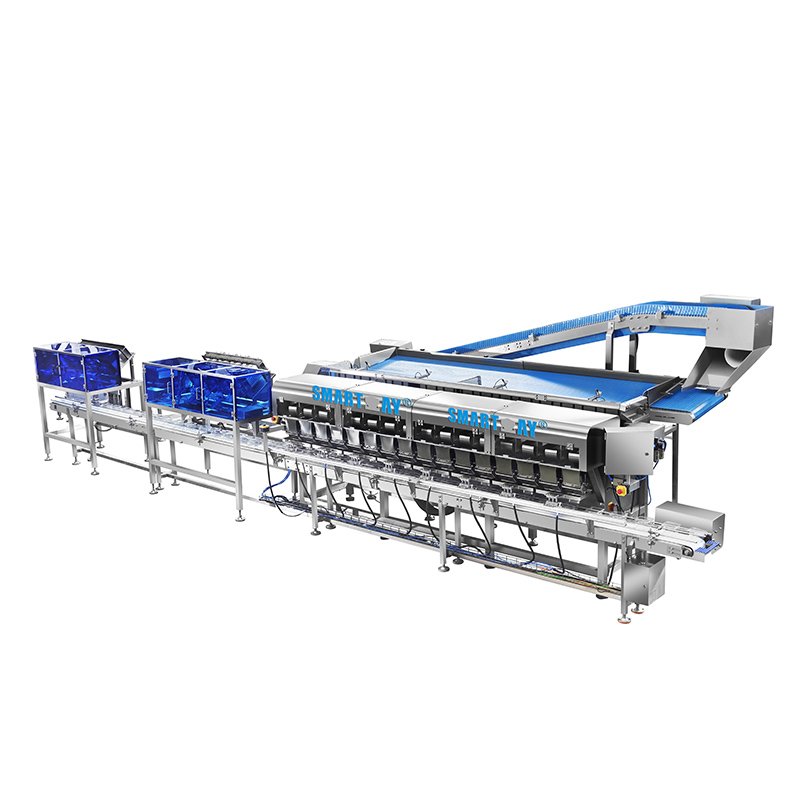
This is where the operational side becomes important.
A lot of blueberry growers and packhouses are not just asking what looks best at retail. They are also asking what works best with their packing line.
Clamshells are still a strong choice because they are one of the more automation-friendly formats for fresh blueberries. A rigid container is easier to feed, position, fill, close, inspect, and move down the line than many looser or less stable alternatives.
That is why so many fresh blueberry packing systems are built around clamshell workflows.
Smart Weigh’s published blueberry clamshell line is a good example. The company describes a process that combines clamshell handling, weighing, filling, and final double weight checking, with output around 30–48 containers per minute. It also emphasizes gentle filling for fragile blueberries, which is critical when growers want better labor efficiency without sacrificing fruit condition.
From an operations standpoint, this matters for a simple reason: packaging is not just about the pack itself. It is about whether the pack format supports a stable, repeatable flow when volume ramps up.
Standard pack sizes keep things simpler
Another reason clamshells still win is that they fit real commercial pack programs.
Smart Weigh’s product page highlights common blueberry pack sizes such as 125g, 250g, 500g, and 1kg, and that lines up with what many growers and packhouses already need in the market. Those pack sizes are familiar, easy to explain to customers, and easier to build line procedures around.
That kind of standardization helps with:
- setup and changeovers
- operator training
- label consistency
- target weight control
- downstream handling
For growers serving multiple customers, that simplicity matters. Peak season is hard enough without adding unnecessary variation into the packing process.
What about pouches, sealed trays, or other alternatives?
Alternative formats are not irrelevant. Some buyers do want lighter packaging, different shelf looks, or sustainability-driven changes. There is clearly more discussion around recyclable materials, reduced plastic use, and new produce packaging concepts than there was a few years ago.
But in fresh blueberries, the question is not just whether a format looks modern. The question is whether it performs well enough across the full supply chain.
That is where clamshells still have a strong edge.
A pouch may reduce rigid material, but it does not provide the same structural protection. A sealed tray may work for certain programs, but it is not always as familiar or as easy to integrate into existing blueberry packing operations. Some paper-based ideas may appeal from a sustainability standpoint, but growers still have to ask whether the fruit will arrive, present, and sell the way it needs to.
That is why clamshells are still holding their ground. They may not be the only format in the conversation, but they are still one of the most practical formats in the field.
Why this matters for berry growers, not just retailers
Growers in the Americas are dealing with more than packaging aesthetics.
They are managing labor pressure, harvest timing, retail requirements, export standards, and the need to keep fruit quality strong through the packout process. When they choose a packaging format, they are really choosing a production workflow.
That is why clamshells still make sense. They help growers and packhouses:
- protect delicate berries better
- keep retail presentation cleaner
- support standard selling weights
- run more stable automated packing
- reduce disruption during peak harvest
In other words, clamshell packaging is still preferred because it works not only on the shelf, but also in the packhouse.
Where Smart Weigh fits in
For growers or packhouses looking at automation, Smart Weigh’s blueberry clamshell packing line fits well into this discussion because it is designed around the format the market already uses.
The published system is aimed at berry farms, co-packers, fruit processors, and peak-season packing operations. Smart Weigh says the line can support 30–48 containers per minute, handle common clamshell sizes, improve weight consistency, reduce labor costs, and protect fruit better than manual packing. The page also describes gentle product handling and final weight inspection, both of which matter when growers are trying to scale fresh blueberry packing without losing control over pack quality.
That makes it relevant not just as a machine, but as part of a broader clamshell packing strategy for fresh blueberries.
Final take
Clamshell packaging is still the preferred choice for fresh blueberries in the Americas because it continues to solve the core problems that growers, packhouses, and retailers actually care about.
It protects fruit.
It shows fruit well.
It fits retail programs.
It works with standard pack sizes.
And it supports automated packing better than many alternatives.
That is why clamshells have stayed so strong, even as the packaging conversation keeps evolving.
The market may keep exploring new formats, and that is expected. But for fresh blueberries, especially in the Americas, clamshells are still the format that makes the most practical sense for a lot of real-world operations.
