 Skip to content
What Is a Clamshell Packing Machine and How Does It Work?
If you grow or pack fresh produce, you already know the packing room can turn into a bottleneck fast.
Manual clamshell packing may work when volume is low. A few workers fill containers, close lids, apply labels, and move packs into cases. But during harvest season, that same setup can quickly fall behind. Labor gets tight, pack weights become inconsistent, product gets handled too many times, and finished clamshells do not move out the door fast enough.
That is where a clamshell packing machine comes in.
For growers, packers, and fresh produce operations across the Americas, clamshell packing automation is not just about replacing labor. It is about making the packing process faster, more consistent, and easier to control.
But before buying one, there is one important thing to understand: not every supplier means the same thing when they say clamshell packing machine.
What Is a Clamshell Packing Machine?
A clamshell packing machine is equipment used to pack products into hinged clamshell containers. These containers are common in fresh produce because they protect the product, are easy to display in retail stores, and allow customers to see what they are buying.
You will see clamshell packs used for blueberries, raspberries and blackberries, strawberries, cherry tomatoes, grapes, mushrooms, salad greens, fresh-cut fruit, and other retail-ready foods.
At the basic level, a clamshell packing machine helps move empty clamshells through the packing process. In many cases, especially with some equipment suppliers, a clamshell packaging machine mainly refers to the container-handling part of the line. That usually means clamshell denesting and closing.
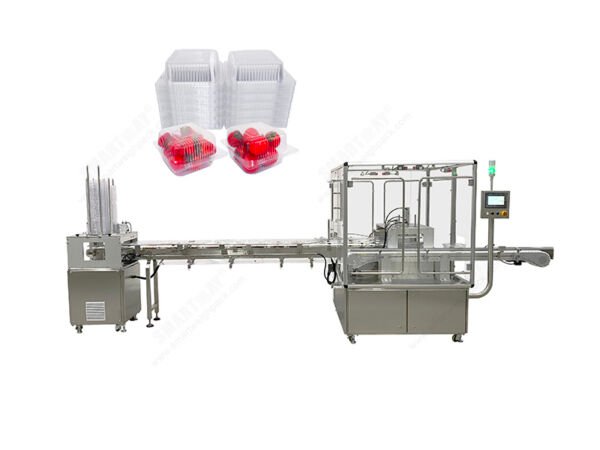
A clamshell denester separates empty containers one by one and places them on the conveyor. After product is filled into the container, a closing unit shuts the hinged lid. This type of setup is useful, but it only handles part of the job.
For most growers, the bigger problem is not just opening and closing clamshells. The real challenge is getting the right amount of product into each pack, doing it gently, and keeping the line moving during peak season.
That is where Smart Weigh USA takes a more complete approach.
Instead of only offering a basic clamshell denesting and closing machine, Smart Weigh USA can help build a complete clamshell packing line. Depending on your product and production needs, the line can include feeding, inspection, automatic weighing, clamshell denesting, filling, closing, checkweighing, labeling, coding, and case packing.
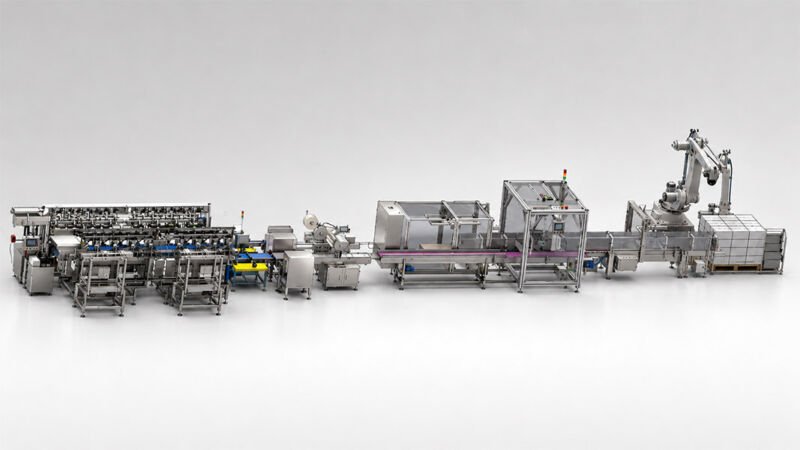
In plain English, we are not just helping you move empty plastic containers down a conveyor. We are helping you turn loose product into finished retail-ready packs with better speed, accuracy, and consistency.
What Products Can Be Packed in Clamshells?
Clamshell packaging is widely used for small, delicate, high-value, and retail-ready products.
- Blueberries
- Raspberries
- Blackberries
- Strawberries
- Cherry tomatoes
- Grapes
- Mushrooms
- Salad greens
- Fresh-cut fruit
- Herbs
- Snack vegetables
Different products need different handling. That is why a good clamshell packing machine should be selected based on the product first, not just the required speed.
Blueberries are usually sold by weight, so weighing accuracy matters. A few extra grams in every clamshell may not look like much, but across thousands of packs per day, that giveaway adds up fast.
Cherry tomatoes can often run at higher speeds, but they still need stable filling, flexible pack size changeover, and consistent retail presentation.
Raspberries, blackberries, and strawberries are more delicate. For these products, gentle handling is just as important as speed. Low drop height, smooth product transfer, and reduced manual touching can help protect fruit quality.
Mushrooms, grapes, and fresh-cut produce may also require different feeding and filling designs depending on product size, flowability, and appearance requirements.
The bottom line is simple: there is no one-size-fits-all clamshell packing machine. The right system should be built around the product, the clamshell size, the target weight, and the way your packing room actually runs.
How Does a Clamshell Packing Machine Work?
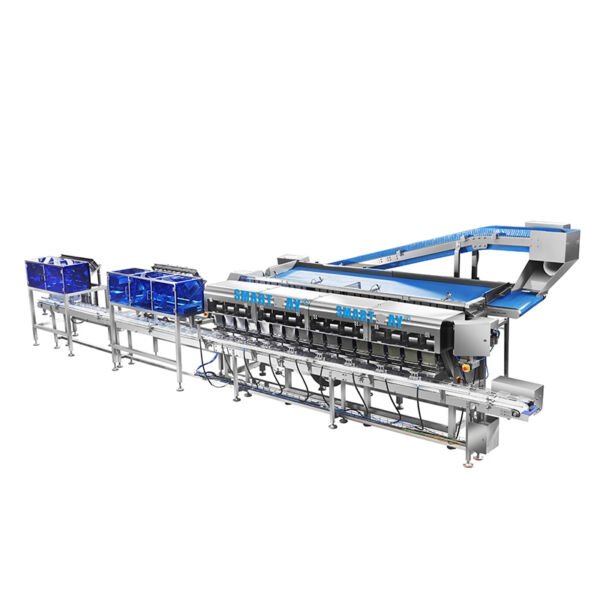
A complete clamshell packing line usually follows a clear step-by-step process.
Product Feeding
First, the product enters the line through manual loading, a feeding conveyor.
Clamshell Denesting
Next, empty clamshells are fed into the system. A clamshell denester separates the stacked containers one at a time and places them onto the conveyor. This reduces manual labor and helps keep the line running at a steady pace.
Weighing or Filling
After the empty clamshells are in position, the product needs to be weighed before filling. For growers selling by net weight, this step is one of the most important parts of the whole clamshell packing line.
Depending on the product, target speed, and budget, the system can use either a linear weigher or a multihead weigher.
A linear weigher is often designed for fragile fruits such as blueberries, raspberries, and cherry tomatoes. With a customized feeding and discharge structure, it helps reduce the drop distance during weighing and filling, so the berries can move more gently through the line with less bruising and product damage.
A multihead weigher is usually a better fit for stronger berries. It uses multiple weighing heads to calculate the best weight combination, helping the machine reach the target weight faster and more consistently. For larger farms, packhouses, and grower-shippers, a multihead weigher can help improve output while keeping product giveaway under control.
This matters because underweight clamshells can create retail issues, while overweight clamshells create giveaway. A few extra grams in every pack may not look like much, but when you are packing thousands of clamshells per day, that giveaway becomes a real profit leak.
At Smart Weigh USA, the weighing system is selected based on your product, clamshell size, target weight, required speed, and floor layout. The goal is not just to fill containers faster. The goal is to hit the right weight, protect the product, and keep the packing line moving steadily during real production.
Filling into Clamshells
Once the target weight is reached, the product is discharged into the clamshell. For delicate products like berries, the filling process must be controlled carefully. The machine should reduce drop height, avoid rough transitions, and keep product movement smooth.
Closing, Labeling, and Case Packing
After filling, the clamshell lid can be closed manually or automatically. From there, the line can include checkweighing, labeling, date coding, and case packing.
A checkweigher verifies the final pack weight. A labeler applies retail labels, barcodes, or private-label stickers. A date coder can print production dates, lot numbers, or traceability lot code information. A case packing system places finished clamshells into shipping boxes.
Not every farm needs every module on day one. Some growers start with automatic weighing and filling, then add closing, labeling, or case packing later. Others need a fully automatic line from the start because their production volume and labor situation demand it.
That flexibility is one of the biggest advantages of working with a full-line supplier.
Manual, Semi-Automatic, or Fully Automatic?
The right clamshell packing setup depends on your volume, labor situation, budget, and future growth. Some farms only need help with the most labor-heavy steps, while larger packhouses may need a fully integrated line from denesting to case packing.
| Setup Type | How It Works | Best For | Main Limitation |
|---|---|---|---|
| Manual Packing | Workers manually fill clamshells, close lids, apply labels, and place finished packs into cases. | Small farms, local markets, low-volume specialty products, and growers with limited upfront budget. | Hard to scale during harvest season. Pack weights can drift, labor demand is high, and delicate products may be handled too many times. |
| Semi-Automatic Clamshell Packing | The line may include automatic weighing and filling, while workers still handle clamshell loading, lid closing, labeling, or case packing. | Small and mid-sized growers who want better speed and accuracy without jumping straight into full automation. | Still depends on manual labor for some steps, so the line may slow down if workers cannot keep up. |
| Fully Automatic Clamshell Packing Line | The line can include automatic denesting, weighing, filling, closing, labeling, and case packing. | Larger farms, packhouses, and grower-shippers supplying retail or export markets. | Requires a better-planned layout, higher investment, and a machine design that fits the product, clamshell size, floor space, and target speed. |
Full automation can be a major upgrade, but only when the line is designed correctly. A fast machine that bruises fruit, jams containers, or does not fit your floor layout will not solve the problem. It will create new headaches.
That is why the best system is not always the most expensive one. The best system is the one that fits your product, your people, your space, and your production goals.
How to Choose the Right Clamshell Packing Machine
Before requesting a quote, growers should prepare a few key details.
Start with the product. Are you packing blueberries, raspberries, cherry tomatoes, grapes, mushrooms, strawberries, or another fresh product? Is it delicate, wet, sticky, irregular, or easy to bruise?
Next, confirm the clamshell size and target weight. Common retail packs may include 4 oz, 6 oz, 8 oz, 11 oz, 1 lb, 2 lb, or custom sizes. If you need to run multiple pack sizes, the machine should support practical changeover.
Then look at your required speed. Some growers measure output in packs per minute. Others think in pounds per hour, cases per hour, or daily production. The key is not just top speed. The key is stable speed that your team can actually maintain during real production.
Accuracy is another major factor. If your product is sold by net weight, automatic weighing can help reduce giveaway and avoid underweight packs. Over time, better weight control can have a direct impact on your bottom line.
Also think about labor. Which part of the process is causing the most pain right now? Manual weighing? Filling? Closing lids? Labeling? Case packing? That answer helps decide which parts of the line should be automated first.
Finally, consider your floor space and future plans. A good clamshell packing line should fit your current packing room while leaving room for growth down the road. You may be packing one product today, but next season you may add new SKUs, new clamshell sizes, or new retail requirements.
Final Thoughts
A clamshell packing machine can be as simple as a denesting and closing system. But for many growers, that only solves part of the problem.
At Smart Weigh USA, we focus on the full packing process. We can help design a complete clamshell packing line that includes feeding, inspection, automatic weighing, filling, closing, checkweighing, labeling, coding, and case packing.
For fresh produce growers and packers, the goal is simple: reduce labor pressure, improve pack weight consistency, protect delicate products, reduce giveaway, and keep retail-ready clamshells moving during peak season.
Whether you are packing blueberries, cherry tomatoes, raspberries, grapes, mushrooms, or other fresh produce, the right clamshell packing line should make your operation more predictable and less chaotic.
Looking for a clamshell packing machine for your farm or packing house? Smart Weigh USA can help design a customized clamshell weighing, filling, and packing line based on your product, target weight, clamshell size, floor layout, and production capacity.
