 Skip to content
What are the Common Types of Candy Packaging Machines
Candy packaging looks simple from the outside, but inside a real production factory, different candy products behave completely differently on the packaging line.
Some candy flows smoothly and can run at very high speed. Some products stick inside the weighing hoppers after only a short production period. Others may break during conveying, melt during sealing, or create unstable weight combinations during high-speed packing.
That is why experienced candy manufacturers rarely choose packaging machines based only on speed or price. In most cases, the right packaging solution depends on two key factors:
- The candy product itself
- The final packaging format
A machine that performs well for hard candy may not work properly for gummy candy. A system designed for pillow bags may not be suitable for premium zipper pouch packaging.
In modern candy factories, packaging decisions are usually made based on product flow characteristics, stickiness, package appearance, production target, labor cost, and future automation plans.
This is also why more candy manufacturers are moving from standalone machines toward complete automatic packaging lines that combine feeding, weighing, filling, sealing, inspection, cartoning, and palletizing together.
Part 1: Candy Packaging Machines by Candy Type
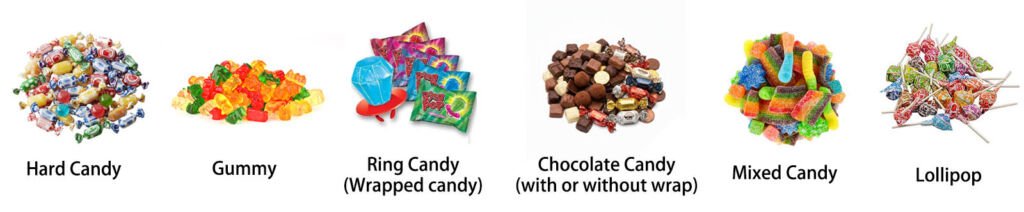
Hard Candy Packaging Machines
Hard candy is one of the easiest candy products for automatic packaging systems because it usually has stable shapes and good product flowability.
Typical products include fruit candy, mint candy, ring candy, wrapped hard candy, and mixed hard candy.
Why Hard Candy Works Well with High-Speed Packaging
One reason hard candy is widely packed using vertical packing machines is because the product can maintain stable flow even at higher production speeds.
Compared with sticky candy, hard candy usually drops faster into weighing buckets, discharges more cleanly, creates less hopper adhesion, and allows faster combination weighing.
This helps the multihead weigher maintain stable accuracy even during continuous production.
Common Production Challenges
Although hard candy is easier to package than gummy candy, manufacturers still face several real production issues.
- Irregular hard candy shapes may create unstable feeding
- Small candy pieces may increase product bouncing
- Mixed hard candy products may create uneven weight combinations
- High-speed production may affect sealing consistency
Recommended Packaging Machine
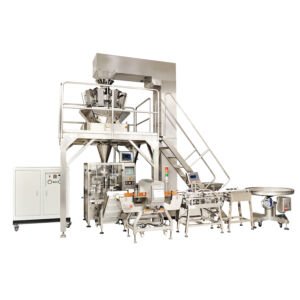
For most hard candy applications, the best solution is usually a multihead weigher vertical packing machine line.
A standard line typically includes a Z-type bucket conveyor, multihead weigher, support platform, VFFS packing machine, finished product conveyor, optional checkweigher, and optional metal detector.
Typical Packaging Formats
- Pillow bags
- Gusset bags
- Mixed candy bags
Typical Production Speed
A standard hard candy vertical packing machine line can usually run around 30–100 bags/min.
If you require higher production speeds, contact us with your target output requirements. We can provide different high-speed candy packaging solutions based on your production needs.
Future Automation Upgrades
- Checkweigher
- Metal detector
- Automatic cartoning
- Case packing
- Robotic palletizing
Gummy Candy Packaging Machines
Gummy candy is one of the most difficult products for automatic packaging systems.
The biggest issue is usually not the packing machine itself. The real bottleneck normally starts at the weighing stage.
In many gummy candy factories, unstable weighing performance happens because the product begins sticking inside standard weighing hoppers after continuous production.
Why Gummy Candy Is Difficult to Pack
Gummy candy usually has sticky surfaces, softer texture, slower discharge, and higher deformation risk.
In real production environments, gummy candy may bridge inside feeding systems, remain inside hoppers too long, discharge unevenly, and affect weighing rhythm.
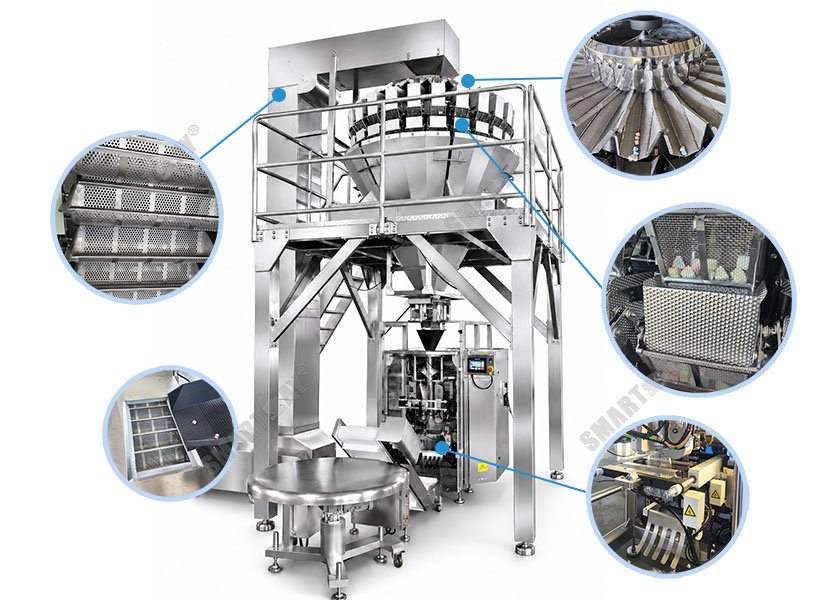
Why Non-Stick Multihead Weighers Matter
A non-stick multihead weigher is designed specifically to reduce product adhesion.
- Dimple plate contact surface
- Anti-stick coating
- Optimized hopper angle
- Smoother discharge path
- Stable feeding control
Without these modifications, gummy products may gradually build up inside standard weighing buckets and reduce production efficiency over time.
Recommended Packaging Formats
- Pillow bags
- Stand-up pouches
- Zipper pouches
- Retail gummy bags
- Mixed gummy candy packs
Recommended Packaging Solutions
- Non-stick multihead weigher
- Multihead weigher vertical packing machine line
- Multihead weigher premade pouch packing machine line
Recommended Production Environment
Factory environment matters more for gummy candy than many manufacturers initially expect.
Production performance can change significantly depending on room temperature, humidity, product storage condition, and sugar coating condition.
Chocolate Candy Packaging Machines
Chocolate candy creates a completely different packaging challenge compared with hard candy or gummies.
In chocolate packaging, the biggest concern is usually not feeding speed. The real concern is product protection.
Why Chocolate Packaging Requires More Control
Chocolate candy reacts more easily to temperature changes, rough conveying, and unstable sealing temperature.
Common Factory Mistakes
One common mistake is trying to run chocolate products on packaging systems originally designed for hard candy.
Although the machine may still operate, chocolate appearance quality may decrease because product drops too aggressively, transfer vibration is too strong, or sealing temperature fluctuates.
Recommended Packaging Solutions
- Gentle conveying systems
- Stable sealing systems
- Controlled production environment
- Accurate weighing systems
Typical Packaging Formats
- Pillow bags
- Stand-up pouches
- Zipper pouches
- Premium retail packaging
Mixed Candy Packaging Machines
Mixed candy packaging is becoming increasingly common in supermarket retail, holiday promotions, sharing bags, and family-size candy packs.
But from a production perspective, mixed candy packaging is much more complicated than single-product packaging.
Why Mixed Candy Creates Weighing Challenges
Different candy products usually have different weights, different shapes, and different flow characteristics. This creates unstable weight combinations during high-speed weighing.
Why Multihead Weighers Are Important
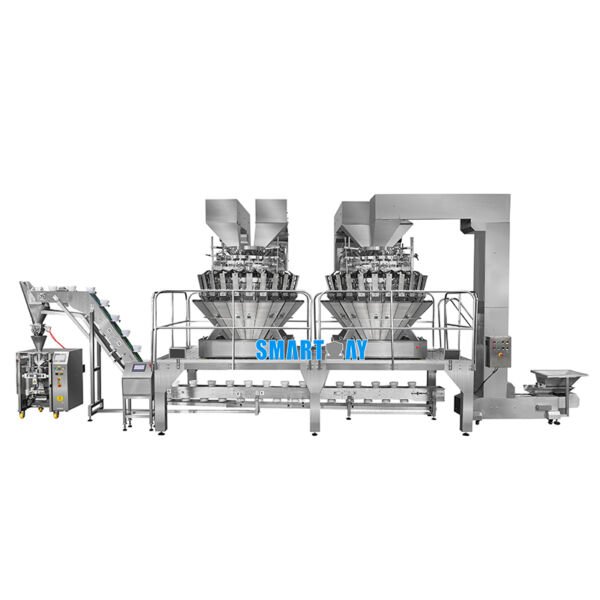
Multihead weighers improve mixed candy packaging because the system continuously calculates the best weight combination from multiple weighing buckets.
This helps improve weighing consistency, reduce giveaway, and maintain higher production speed.
Recommended Packaging Formats
- Sharing bags
- Family packs
- Retail assortment bags
- Promotional candy bags
- Stand-up pouches
Lollipop Packaging Machines
Lollipop packaging is more customized than most candy packaging projects because the product includes a stick.
This changes feeding direction, product orientation, spacing control, and transfer stability.
Common Production Challenges
- Unstable product orientation
- Stick interference during transfer
- Inaccurate counting
- Inconsistent spacing
Recommended Packaging Solutions
- Customized feeding systems
- Counting systems
- Secondary bagging systems
- Tray loading systems
- Cartoning systems
Part 2: Candy Packaging Machines by Packaging Format
Pillow Bag Candy Packing Machines
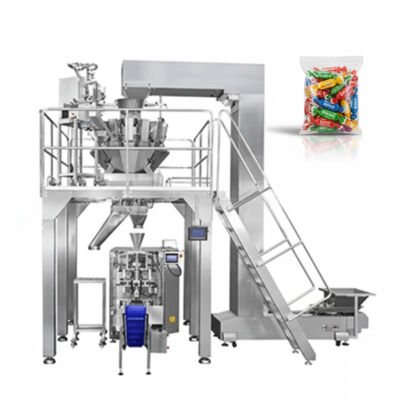
Pillow bags remain the most widely used candy packaging format because they are simple, fast, and cost-effective.
Best Candy Types for Pillow Bags
- Hard candy
- Gummy candy
- Mixed candy
- Chocolate snacks
Recommended Packaging Machine
The most common solution is a multihead weigher vertical form fill seal machine line.
Why VFFS Is Still Mainstream
Many factories choose VFFS packaging not because it looks more premium, but because it offers faster production, lower film consumption, easier maintenance, and lower long-term operating cost.
Stand-Up Pouch Candy Packing Machines
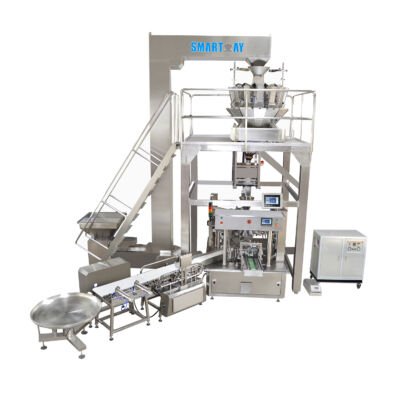
Stand-up pouches are becoming more popular for premium retail candy packaging.
Compared with standard pillow bags, stand-up pouches create better shelf visibility, larger branding area, and stronger perceived product value.
Why Candy Brands Prefer Stand-Up Pouches
Many candy brands choose stand-up pouch packaging because retail competition has become much stronger.
In supermarket environments, package appearance directly affects shelf impact, consumer attention, and perceived product quality.
Recommended Packaging Machine
The most common solution is a rotary premade pouch packing machine.
Common Factory Considerations
Premade pouch packaging usually costs more than VFFS packaging and runs slower than pillow bag production, but it creates stronger retail presentation.
Final Thoughts
Different candy products require different packaging machine designs.
Hard candy usually works well with high-speed vertical packing machine lines. Gummy candy often requires non-stick multihead weighers to solve sticky product handling. Chocolate candy needs gentle conveying and stable sealing control. Mixed candy packaging requires accurate weighing to reduce giveaway. Lollipop packaging often needs customized feeding and counting systems.
At the same time, packaging format also matters. Pillow bags are usually more efficient for mass production, while stand-up pouches and zipper pouches create stronger retail presentation.
For candy manufacturers, the smartest approach is to evaluate both candy characteristics and packaging format before selecting a packaging system.
Smart Weigh can provide complete candy packaging solutions including feeding, weighing, vertical packing, premade pouch packing, inspection systems, cartoning, case packing, and robotic palletizing.
Whether you are upgrading an existing line or building a new candy packaging project, choosing the right machine configuration can help improve efficiency, reduce giveaway, and support long-term factory growth.
