 Skip to content
Clamshell Packing Machine for Blueberries, Cherry Tomatoes and Fresh Produce
For blueberries, cherry tomatoes, and fresh produce, a clamshell packing machine is not just a filler. It is a controlled handling system. The job is not only to move product faster, but to protect product quality, hit target weight, reduce giveaway, and keep the line running during peak season.
Most packers start looking at automation when manual packing becomes a bottleneck. Labor is hard to schedule. Pack weights are inconsistent. Operators overfill to avoid underweight complaints. Product gets handled too many times. Finished clamshells may pass inspection, but they do not always look clean, full, and retail-ready.
That is where the right clamshell packing line makes a real difference.
Fresh Produce Packing Is All About Product Control
Blueberries, cherry tomatoes, grapes, leafy greens, and cut vegetables all behave differently on a packing line. A machine that works well for one product may not automatically work for another.
Blueberries are small, light, round, and easy to bruise. Too much vibration, rough transfer, or high drop height can damage the fruit and hurt shelf appeal. For blueberries, the priority is gentle feeding, accurate weighing, and low-impact discharge.
Cherry tomatoes create another challenge. They roll, bounce, and vary in size. If the filling station is not controlled, tomatoes can spill between containers or bounce out of the clamshell. For cherry tomatoes, stable indexing, guided filling, and smooth product flow are critical.
Leafy greens and cut vegetables bring moisture, volume, and sanitation concerns. Washed produce can affect belts, sensors, weighing stability, and cleaning requirements. The line must be designed for real packhouse conditions, not just a clean showroom demo.
The best clamshell packing machine starts with the product. Speed comes after control.
The Hidden Cost: Giveaway, Rework, and Damaged Product
A few extra grams in one clamshell may not look like much. Across thousands of packs per shift, it becomes a serious profit leak. Many manual packing teams overfill because they do not want underweight packs. That keeps retailers happy, but it gives away product all day.
Underweight packs create a different problem: rechecking, repacking, retailer complaints, and quality control headaches. Damaged product is just as costly. Bruised blueberries or messy cherry tomato packs may meet the weight target, but they lose shelf appeal.
A fast machine that damages fruit or gives away product is not saving money. It is losing money faster.
A well-designed clamshell packing line should reduce labor pressure, improve weight accuracy, reduce rework, protect product appearance, and create more consistent finished packs.
Weighing Accuracy Must Work With Gentle Handling
The weighing system is the heart of a fresh produce clamshell packing line. But for delicate products, accuracy alone is not enough. The product must arrive in the clamshell looking fresh and undamaged.
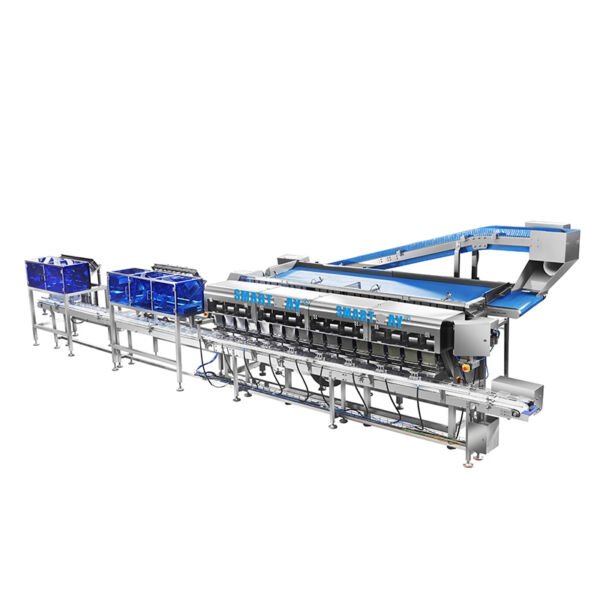
A multihead weigher is often a strong choice for commercial blueberry and cherry tomato packers because it uses combination weighing to hit target weights more accurately. This helps reduce overweight giveaway and improve line speed. However, the weigher must be configured for fresh produce. Hopper surface, vibration level, discharge timing, chute angle, and drop height all matter.
For smaller operations, a linear weigher may be a practical option. It can be simpler, more affordable, and suitable for lower-speed packing. But when volume increases, a multihead system usually provides a better balance of speed and accuracy.
The right question is not “Which weigher is fastest?” The better question is: “Which system can hit the target weight consistently without damaging the product?”
Denesting and Filling Can Make or Break the Line
Many buyers focus on the weigher and forget about the clamshell itself. That is a mistake.
Empty clamshells are not always consistent. Some stick together. Some deform during storage. Some lightweight containers do not separate cleanly. If the denester misses, doubles, jams, or misaligns containers, the whole line slows down.
That is why actual clamshell samples should be tested before final machine design. A denester that works with one tray may struggle with another tray that looks almost the same on paper.
Filling also needs control. Blueberries need low-impact discharge. Cherry tomatoes need guided filling so they do not bounce out. Leafy greens need enough opening space and flow control to avoid bridging or uneven filling.
Automatic closing can save labor, but it must be gentle and consistent. The lid needs to latch without crushing product or deforming the container. If labeling is integrated, the clamshell must be stable and properly closed before label application.
Design the Line Around Real Packhouse Conditions
Fresh produce lines run in cold, wet, busy environments. They deal with seasonal peaks, multiple SKUs, limited labor, and tight shipping schedules.
That means the machine must be easy to operate, clean, adjust, and maintain. If the line runs different clamshell sizes, changeover should be quick and repeatable. Operators should not need to fight the machine every time the SKU changes.
Line balance also matters. A fast weigher does not help if the denester, closer, labeler, or outfeed table cannot keep up. The real goal is not maximum machine speed. The real goal is stable finished packs per minute.
Smart Weigh USA looks at the complete line, not just one machine. A proper fresh produce clamshell packing solution may include feeding, weighing, clamshell denesting, filling, closing, checkweighing, labeling, coding, outfeed, and case packing. When these systems are designed together, the line runs smoother and operators have fewer problems on the floor.
What to Prepare Before Requesting a Quote
A good quote starts with real production data. Before asking for a clamshell packing machine price, buyers should prepare:
- Product type and condition: dry, wet, washed, chilled, sticky, fragile, or easy to roll
- Product size range and variation
- Target weight per clamshell
- Acceptable weight tolerance
- Required packs per minute or packs per hour
- Clamshell dimensions, photos, material, hinge style, and lid design
- Number of clamshell sizes used on the same line
- Current labor count and manual packing speed
- Existing upstream equipment, such as washer, dryer, sorter, inspection table, or conveyor
- Downstream needs, such as checkweigher, reject system, labeler, date coder, case packing, or metal detection
- Factory layout, line direction, power, air supply, and cleaning requirements
The more details a buyer provides, the less guesswork goes into the machine recommendation.
What Should Be Automatic?
Not every operation needs full automation right away. The right level depends on labor cost, volume, budget, SKU complexity, and retailer requirements.
Automatic weighing is usually one of the highest-ROI upgrades because it improves consistency and reduces giveaway. Automatic clamshell denesting is valuable when labor is tight or line speed is limited by manual tray placement. Automatic filling reduces product handling and helps create cleaner, more consistent packs.
Automatic closing is useful for higher-volume lines, but it should be tested with the real clamshell. Checkweighing and reject systems are important for quality control. Labeling and coding are critical for supermarket, distribution, traceability, and export requirements.
The smart move is not always to automate everything at once. The smart move is to automate the steps where labor, errors, giveaway, or downtime cost the most money.
Smart Weigh Clamshell Packing Line Options
For small and medium growers, an assisted clamshell filling line may be the best starting point. This setup can include manual loading, gentle feeding, linear or compact weighing, manual clamshell placement, automatic filling, and manual closing. It improves accuracy without requiring a full turnkey investment.
For commercial blueberry and cherry tomato packers, a more automated line may include product feeding, multihead weighing, automatic clamshell denesting, indexed filling, optional automatic closing, checkweighing, labeling, coding, and outfeed. This setup is designed for higher output, fewer operators, better pack consistency, and reduced giveaway.
For larger processors, export packers, and supermarket suppliers, Smart Weigh USA can provide a turnkey fresh produce packing line. This can integrate inspection, sorting, feeding, weighing, denesting, filling, closing, checkweighing, labeling, case packing, and full-line controls.
The value is not just automation. The value is having one integrated system designed around the product, container, speed, labor plan, and floor layout.
Final Thoughts
Blueberries, cherry tomatoes, and fresh produce need more than a basic filling machine. They need a clamshell packing line that balances speed, accuracy, gentle handling, sanitation, flexibility, and uptime.
The cheapest machine is not always the lowest-cost machine. If it bruises product, gives away weight, jams clamshells, slows changeover, or requires constant operator adjustment, it becomes expensive fast.
A good clamshell packing machine should help packers reduce labor pressure, control product giveaway, improve retail presentation, and run more consistently during busy seasons.
If you are planning a blueberry, cherry tomato, or fresh produce clamshell packing project, send Smart Weigh USA your product details, clamshell samples, target weight, required speed, plant layout, and downstream requirements. Our team can help recommend a practical line configuration built around your real production needs.
