 Skip to content
How to Choose a Berry Clamshell Weighing and Filling Line for Your Farm?
Berry packing looks simple from the outside. Pick the fruit, put it in a clamshell, close the lid, ship it out. Easy, right?
Not exactly.
Anyone who has worked through a real harvest season knows the truth. Berry packing is where labor, fruit quality, speed, accuracy, and retail presentation all collide. If your team is still hand filling every clamshell, you are probably dealing with the same pain points every season: inconsistent weights, too much product giveaway, bruised berries, slow output, tired workers, and supervisors constantly chasing the line to keep orders moving.
That is why more farms and packing houses are looking at automatic berry clamshell weighing and filling lines. But here is the catch: the best line is not always the fastest or most expensive machine on the market. The right system is the one that fits your berry type, pack size, labor situation, floor space, and real production goals.
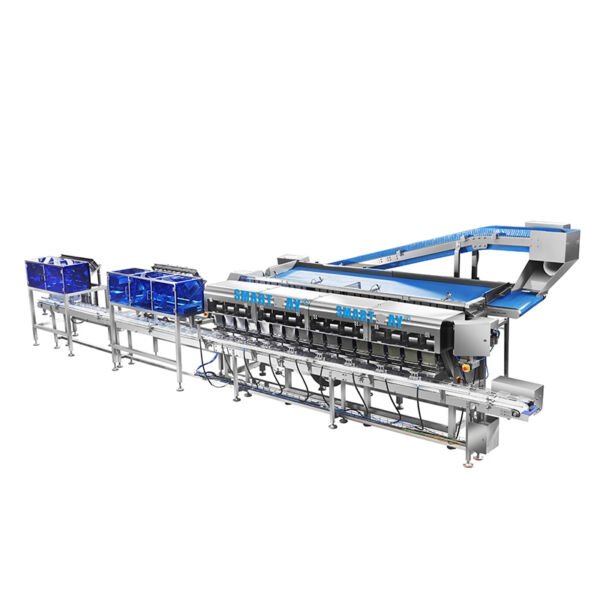
For many growing farms, especially blueberry operations, a practical setup includes automatic clamshell feeding, linear weighing, gentle filling, lid closing, locking, and optional checkweighing or labeling. That is exactly the kind of work Smart Weigh’s automatic berry clamshell weighing filling packing machine system with linear weigher is designed for.
Let’s walk through what you should look at before buying one.
Start With the Fruit, Not the Machine
The first mistake buyers make is starting with machine speed. Before asking “How many packs per minute can it run?” you need to ask, “What kind of fruit are we actually packing?”
Blueberries are usually easier to run than raspberries or blackberries because they flow better. But they still need careful handling. You do not want rough dumping, excessive drop height, or aggressive vibration that damages the berry surface. With blueberries, appearance matters. Retail buyers and consumers notice bruising, soft fruit, juice stains, and broken bloom.
Raspberries and blackberries are even more sensitive. They can collapse or leak juice if the filling process is too aggressive. If you plan to run these fruits, the line needs to be tuned for a softer product flow and lower impact.
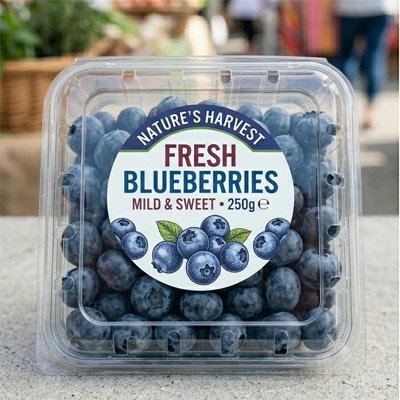
Then there are related small produce items like cherry tomatoes. They are tougher than berries, but clamshell presentation, weight accuracy, and closing stability still matter. A line that works well for blueberries may also be adapted for other similar products, but the setup should be confirmed with real samples.
Bottom line: do not buy from a catalog photo. Send your supplier actual fruit information, clamshell samples, target weights, and expected output. A good line should be configured around your product, not the other way around.
Know Your Clamshell Size and Target Weight
Most berry farms pack into common retail clamshell sizes such as 125g, 250g, 500g, or 1kg. In the U.S. market, you may also see pack sizes based on ounces, pints, or pounds depending on the retailer and region.
This matters because the pack size affects everything: weighing range, filling speed, clamshell positioning, lid closing, line length, and operator workflow.
A small 125g blueberry pack needs fast, repeatable filling with tight weight control. A 500g or 1kg clamshell carries more fruit, so filling volume, discharge timing, and container support become more important. Larger containers may also run at a different practical speed than smaller ones.
Smart Weigh’s berry clamshell system is built around common retail blueberry pack formats, with a standard weighing range suitable for many 100–500g applications and customization available for larger formats up to around 1kg depending on the project. That gives farms flexibility when they are packing different SKUs for different customers.
Still, the key is testing. Not all clamshells behave the same way. Lid design, hinge position, plastic thickness, locking structure, and stacking quality can all affect denesting and closing. Cheap clamshells may save money upfront but cause jams and downtime on the line. That is why actual container samples should be part of the buying process.
Why Linear Weighing Makes Sense for Blueberries
For delicate fruit, weighing is not just about hitting the target number. It is also about controlling how the product moves.
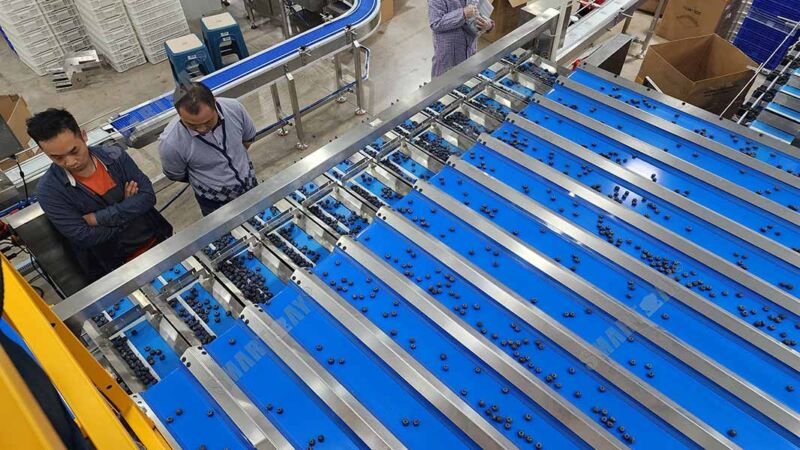
A linear weigher can be a strong fit for blueberries because it supports a more direct and controlled product path. Instead of relying on hand scooping or rough manual dumping, berries are fed, weighed, and discharged into the clamshell in a more consistent way. The goal is to balance accuracy, speed, and gentle handling.
This is especially important for farms upgrading from manual packing. Manual filling may seem flexible, but it often creates hidden costs. One worker may overfill by a few grams, another may underfill and need rework, and another may handle fruit too roughly. Across thousands of packs per day, those small differences turn into real money.
A linear weighing and filling system helps standardize the process. It gives your team a more repeatable way to fill each clamshell while reducing dependency on manual judgment.
That does not mean every berry operation should use the same machine. A huge packhouse running very high volumes may need a different type of system than a mid-sized farm. But for farms and packing houses that want a practical automatic blueberry clamshell line, a linear weigher setup is often a smart, cost-effective option.
Do Not Choose by Speed Alone
Speed sells machines. But stable speed makes money.
A supplier may advertise a high maximum speed, but that number does not always reflect your real packing shed conditions. In the real world, output depends on berry condition, pack size, clamshell quality, upstream feeding, operator support, and how well the entire line is integrated.
A fast weigher will not help much if the empty clamshell feeder keeps jamming. A high-speed filling section will not matter if the closer cannot lock lids cleanly. A line rated for big numbers on paper may still run slower if workers cannot load materials, remove finished packs, or keep fruit feeding evenly.
That is why you should look at practical working speed, not just top speed.
Smart Weigh’s automatic berry clamshell weighing and filling system is positioned as a practical farm and packing house solution, with typical output around 30–50 clamshells per minute depending on berry condition, pack weight, and line configuration. For many farms moving away from hand filling, that is already a major step up in labor efficiency and packing consistency.
The better question is not “What is the highest possible speed?” The better question is “What speed can this line run steadily during my harvest season with my fruit, my clamshells, and my crew?”
That is the number that matters.
Watch the Giveaway
Product giveaway is one of the most expensive problems in berry packing because it hides in plain sight.
A few extra grams in one clamshell may not sound like a big deal. But multiply that by thousands of packs per day, then multiply it by the number of days in your season. Suddenly, you are giving away a lot of sellable fruit for free.
The formula is simple:
Daily giveaway cost = average overweight × packs per day × product value
If your manual packing process is consistently overweight, automation can help you tighten the range. A weighing system with practical accuracy control can reduce overfill, lower rework, and make finished packs more consistent.
Smart Weigh’s berry clamshell line is designed for accurate weighing and filling, with product specifications showing practical accuracy around ±5g depending on material and operating conditions. That gives farms a useful baseline when calculating ROI.
The point is not only saving a few grams. The point is building a more controlled packing process. When your weights are more consistent, your supervisors spend less time fixing packs, your workers spend less time rechecking, and your finished product looks more professional.
Make Sure the Line Handles the Whole Clamshell Process
A real berry clamshell line should do more than drop fruit into a box.
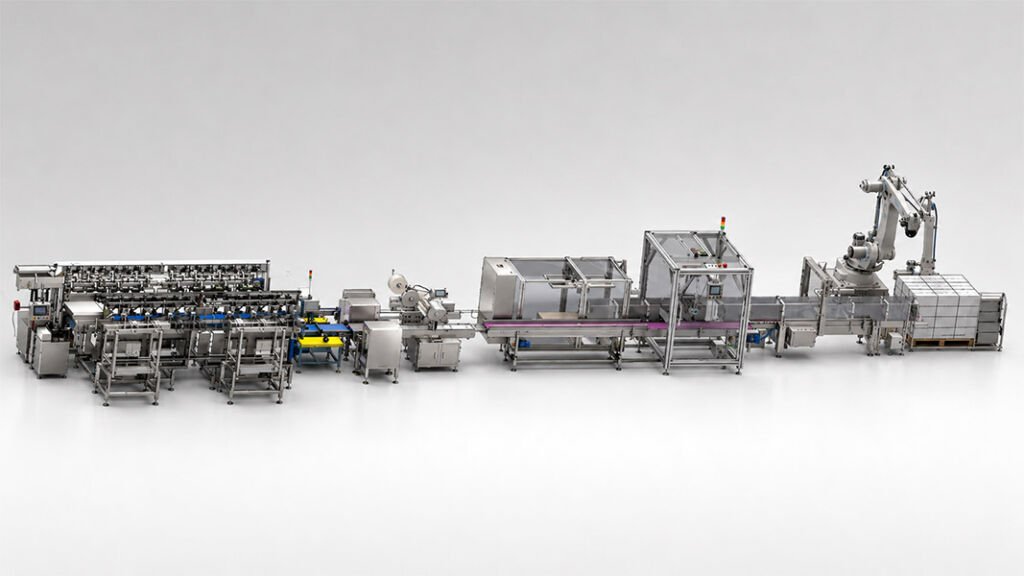
For most farms, the full process includes several steps:
Automatic Clamshell Feeding
Empty clamshells need to be fed and positioned. If this part is manual, you need enough labor to keep up. If it is automatic, the feeder must handle your actual clamshell style reliably.
Linear Weighing and Filling
Berries need to be weighed and filled. This is where the linear weigher does the heavy lifting. The filling process should be smooth enough to protect fruit quality while accurate enough to control giveaway.
Clamshell Closing
The clamshell lid needs to be closed. This sounds simple, but anyone who has packed berries knows lids can be a headache. If the clamshell is misaligned, overfilled, or poorly supported, the lid may not close properly.
Clamshell Locking
The clamshell needs to be locked. A loose lid can create problems during labeling, case packing, transport, and retail handling.
Optional Checkweigher
Many operations add checkweighing. This confirms final pack weight and helps reject underweight or overweight packs for correction.
Optional Labeling or Coding
The line may connect with labeling, date coding, or downstream case packing depending on the customer’s retail requirements.
Smart Weigh’s system is built around this kind of complete workflow: automatic clamshell feeding, linear weighing and filling, clamshell closing, clamshell locking, and optional checkweigher, labeling, or coding equipment. That makes it more than a standalone weigher. It becomes part of a real packing process.
Protect Berry Quality During Filling and Closing
When berries hit the shelf, presentation sells.
Retail clamshells should look full, clean, and consistent. Berries should not look crushed, wet, or beaten up. The lid should close neatly. Labels should sit correctly. The pack should look like it belongs in a serious retail program.
That starts with gentle handling.
When evaluating a berry clamshell line, look at the product path. How far do the berries drop? Are they transferred smoothly? Are they vibrated too aggressively? Does the filling discharge hit the bottom of the clamshell too hard? Are the containers stable during filling? Does the closing section press the lid without crushing fruit?
These small mechanical details make a big difference. A machine that treats berries roughly may give you speed but cost you quality. For fresh fruit, that is not a good trade.
A good berry packing line should reduce unnecessary transfer points, keep product flow controlled, and support clamshells properly during filling and closing. This is one reason Smart Weigh’s linear weigher system makes sense for blueberry applications where farms want a practical balance of output, accuracy, and gentle product handling.
Match Automation Level to Your Farm
Not every farm needs the same automation level.
A small seasonal farm may not need a fully automatic line on day one. It may start with manual clamshell loading and automatic weighing/filling. That can still reduce hand weighing and improve consistency.
A growing blueberry farm may need automatic clamshell feeding, weighing, filling, closing, and locking. This reduces labor pressure and helps the packing shed keep up during peak harvest.
A retail-focused packing house may need checkweighing, labeling, date coding, and smoother downstream handling.
An export or co-packing operation may also need traceability, inspection, metal detection, or case packing integration depending on the product and customer requirements.
| Operation Type | Recommended Automation Setup |
|---|---|
| Small seasonal farm | Manual clamshell placement with automatic weighing and filling |
| Growing blueberry farm | Automatic clamshell feeding, weighing, filling, closing, and locking |
| Retail-focused packing house | Add checkweighing, labeling, and date coding |
| Export or co-packing operation | Add traceability, inspection, and downstream case packing options |
The key is to buy for today while planning for tomorrow. Do not overbuy a system that your team cannot use efficiently. But do not underbuy a machine that becomes a bottleneck one season later.
Smart Weigh’s advantage here is flexibility. The berry clamshell system can be configured around different clamshell formats, automation needs, and line layouts. For farms that expect to grow, that kind of customization matters.
Think About Integration Before Installation
One common mistake is treating the berry clamshell machine as an island.
In most packing sheds, the line needs to connect with upstream and downstream equipment. Upstream, you may already have sorting, grading, inspection, or washing equipment. Downstream, you may need checkweighing, labeling, date coding, collection tables, or case packing.
The transition points matter. If berries arrive unevenly, the weigher may starve or overload. If finished clamshells exit too fast for labeling or case packing, you create a bottleneck. If the line layout does not match your floor space, operators end up walking too much or fighting the workflow all day.
Before buying, map your current process. Where does the fruit come from? Where do empty clamshells enter? Where do finished packs go? How many operators will stand at the line? Where will rejected packs be corrected? Where will labels, printers, and cases be staged?
A good supplier should ask these questions before quoting. The machine is only part of the answer. The real win is a line that fits your packing shed.
What to Prepare Before Asking for a Quote
To get a serious recommendation, prepare the right information upfront.
- Berry type: blueberry, raspberry, blackberry, mulberry, cherry tomato, or other similar product
- Target pack weight: 125g, 250g, 500g, 1kg, or custom weight
- Actual clamshell photos and samples
- Current manual packing speed
- Target clamshells per minute
- Expected labor reduction
- Need automatic clamshell feeding or not
- Need closing and locking or only filling
- Need checkweigher, labeler, or date coder
- Available floor space and packing shed layout
- Upstream sorting or grading situation
- Downstream case packing plan
- Power supply requirements
Also be honest about your real production pain point. Are you trying to reduce labor? Improve accuracy? Increase output? Stop giveaway? Meet a retailer’s pack standard? Replace old equipment? A supplier can recommend a better configuration when they know the real business problem.
Final Thoughts
Choosing a berry clamshell weighing and filling line is not about chasing the biggest number in a brochure. It is about building a packing process that works during real harvest pressure.
The right line should protect fruit quality, improve weight consistency, reduce labor dependency, control giveaway, close clamshells reliably, and fit your packing shed layout. For many farms and packing houses, that means choosing a practical automatic system with clamshell feeding, linear weighing, filling, closing, locking, and optional inspection or labeling.
Smart Weigh’s automatic berry clamshell weighing filling packing machine system with linear weigher is built for that kind of operation. It gives blueberry farms and fresh fruit packing houses a realistic path from manual packing to a more consistent, automated, retail-ready clamshell process.
The bottom line is simple: do not buy just a machine. Buy a line that helps your crew pack better fruit, faster, with less waste and fewer headaches down the road.
